When Catharine Nepomnyashchy, the Director of the Harriman Institute, appeared on the Miller Theatre stage on Friday evening, she apologized for the fifteen-minute delay in the start of the program. Lateness, she explained, is a hazard of having so many articulate people at dinner.
Indeed the Columbia University panel discussion, Lolita in New York: 50 Years Later, seemed at times more like a dinner party at which a bit too much wine had been served.
Valentina Izmirlieva, Associate Professor of Slavic Literatures at Columbia, led the panel in a discussion of Vladimir Nabokov’s notorious novel Lolita, its precarious beginnings, and its profound influence on literature around the world.
The guest of honor (in Nabokov’s absence) was Jason Epstein, editorial director at Random House for four decades, creator of the Vintage paperback series, and co-founder of the New York Review of Books. It was Epstein—then at Doubleday & Company—who published excerpts of Lolita in Doubleday’s literary magazine, The Anchor Review, and paved the way for an American edition.
Vladimir Nabokov had struggled to find an American publisher for the story of Humbert Humbert and his illicit obsession with his twelve-year-old stepdaughter. Nabokov finally accepted an offer in 1955 from the French publisher Olympia Press, which had a reputation as a purveyor of dirty books, literary and otherwise.
Though it sold out its initial run of 5,000 copies, the novel went largely unnoticed until the writer Graham Greene praised it in an interview with the Times of London. Greene’s approval attracted a hail of negative criticism, leading to the book’s eventual ban in France. Lolita’s content was disputed by American censors, but it was published without incident in 1958 by Putnam’s Sons. The book was quickly accepted as a modern classic.
Epstein recalled that Edmund Wilson, the literary critic, had handed him the novel, held together with a large binder clip, calling the story “repulsive,” a heavy statement since, according to Epstein, Wilson was hardly a prude. But instead of being repulsed, the young publisher was struck by the humor in Nabokov’s prose—the puns and play of language.
Rereading the novel recently, however, Epstein reflected that he now saw in the novel “a repellent version of America.” His sentiments were disputed by his fellow panelists: Princeton’s Michael Wood, Columbia professor of English from 1968 to 1982 and author of The Magician’s Doubts, a critical meditation on Nabokov’s life and work; and the Nobel Prize-winning Turkish novelist, Orhan Pamuk, who teaches comparative literature at Columbia.
Pamuk spoke of the sense of liberation Lolita gave him as a young writer, not for its sexual content, but rather for its lack of social commentary. In the early 1970s, when Pamuk first read the novel, convention demanded that a writer take a political stance through his work. Lolita showed allegiance only to the principle of art for art’s sake. “Beauty requires not only a suspension of disbelief,” Pamuk asserted, “but a suspension of political correctness.”
Izmirlieva attempted to show that all roads lead to Columbia on the subject of Lolita. Jason Epstein is an alumnus, as are John Hollander, who wrote the first American review of the novel, and the late Douglas Black, then president of Doubleday Books.
Epstein waved the point away saying that Columbia was “that kind of place in those days,” partly because of its relative proximity to Greenwich Village. “Harvard,” he said, “was a rural backwater.”
The evening’s commentary was sponsored by Columbia University’s Harriman Institute, formerly known as the Russian Institute. Though the panelists seemed to agree that Nabokov, who immigrated to the United States in 1940, was foremost an American writer. Ownership of the great writer, or at least of his work, is a topic of some interest at the moment.
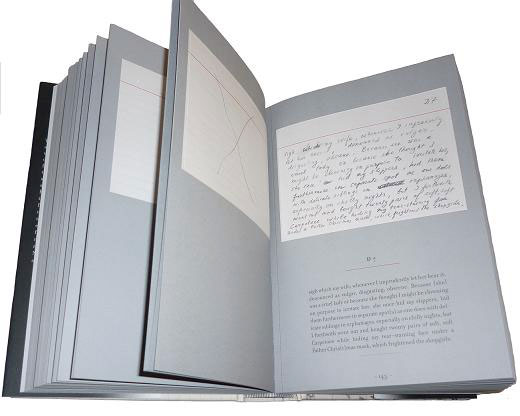
Nabokov’s only son, Dmitri, announced his intension in April to publish his father’s unfinished novel, The Original of Laura. Though Nabokov’s last wishes stipulate that any incomplete manuscripts be burned, Dmitri and Nabokov’s wife Vera, who died in 1991, hesitated to comply. Since Nabokov’s death in 1977, Laura has remained a guarded secret and an object of speculation in the literary world.
When the moderator put this matter to the panel, Jason Epstein commented that he thought Dmitri Nabokov “made a very good living off his father.” At this statement, the panel fell to talking amongst themselves, appearing to forget about the audience until laughter from the crowd brought them back to their duties.
Epstein went on to intimate that he did not believe that Dmitri had translated his father’s writing as he was purported to have done, but Epstein did not elaborate on the claim.
The audience had been informed that no questions would be taken except those submitted in writing, on index cards distributed for the purpose. Regardless, any newly-piqued curiosity would go unsatisfied, as Epstein excused himself from the stage apologetically, saying he had a very long trip ahead.
Izmirlieva turned to the remaining scholars asking, “Are we ready to go ourselves?” But the party decided to stay for one more round.
October 2008
 Regina Galea